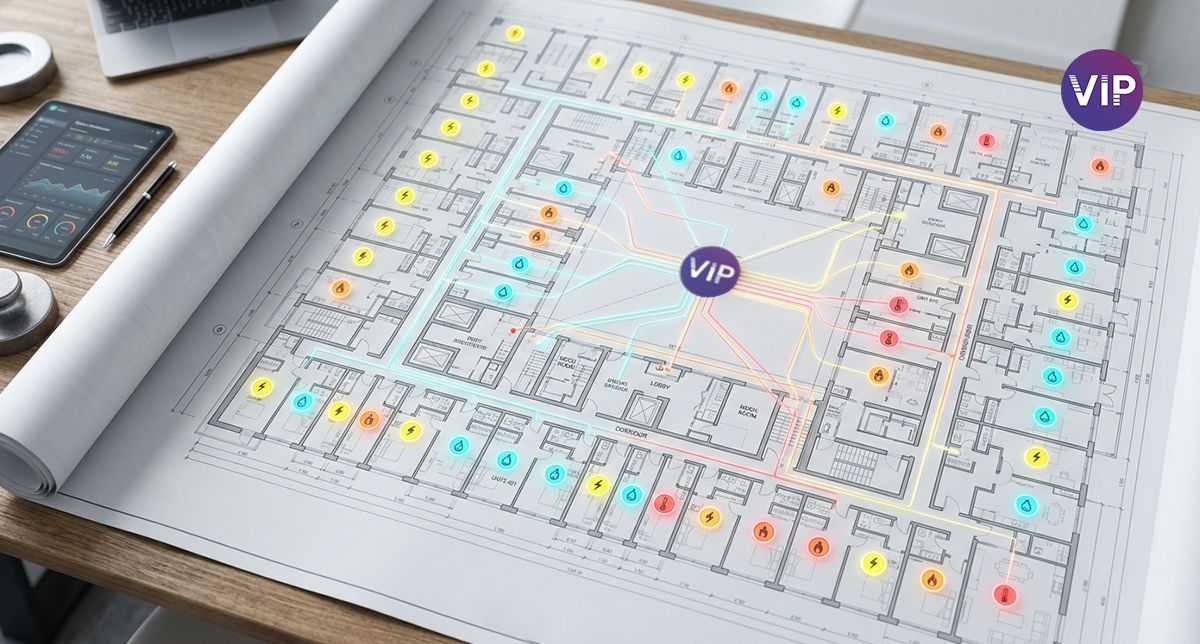
Who Can Develop an Energy Metering Strategy?
A building's energy metering strategy is just as important as hardware procurement and installation.
A full project scope, Measurement Canada compliance, communication protocols, and future meter-type integrations should be determined and vetted well before the first meter is mounted on a wall. When these factors are treated as afterthoughts, you risk painting yourself into a corner with incompatible systems or costly design changes.
A long-term sub-metering strategy requires a holistic, systems-level perspective. But who is actually qualified to build that roadmap?
Here is what you need to look for in a partner to develop a compliant, future-proof energy metering strategy.
Metering Strategies — What are Your Options?
Metering providers generally have two paths when developing a package for a new property or retrofitting an old building: stretching internal resources to handle planning in-house or partnering with an external firm.
Sub-metering companies and utilities excel at managing billing operations and multi-tenant relations. However, when it comes to designing advanced metering infrastructure, planning should involve professionals with end-to-end insights of the commissioning process.
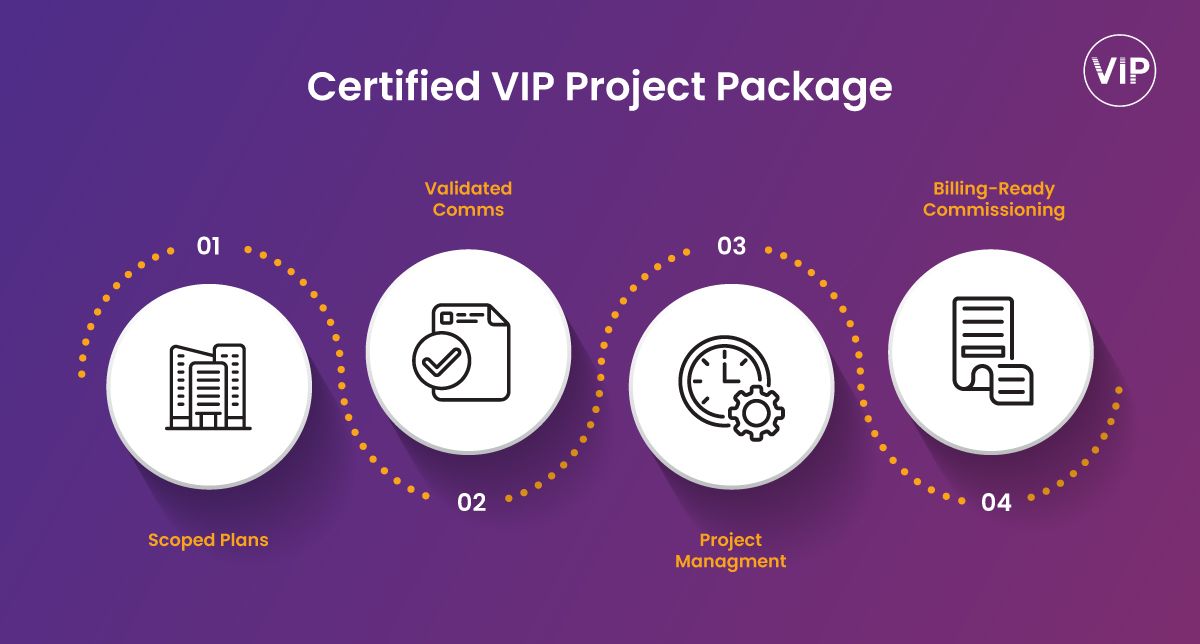
Technical partners, such as VIP Meter Services (Verification & Inspection Professionals), go beyond sourcing metering hardware. These services provide fully certified blueprints for client properties, which include:
- Properly scoped commercial and residential project plans that account for electricity, water, gas, and thermal meter systems;
- Validating communications to match building specs;
- Oversight to ensure installations pass inspection the first time;
- Project management to ensure meters are commissioned on time before occupancy; and
- Meter documentation is accurate, and systems are handed off ready to bill.
Choosing a Partner for AMI
A meter services partner should provide you with all relevant certifications and the technical knowledge to deploy a smart meter system that will support a site’s long-term needs and stay reliable in the field.
Qualifications and Regulatory Authority
A metering project partner should be able to install and certify to regulatory standards. Look for a team with Measurement Canada accreditation, specifically for S-E-04 installation verification. This ensures that the professionals designing your system understand exactly what inspectors will demand before the project even breaks ground.
As an authorized service provider for Measurement Canada, VIP Meter Services can oversee installations and conduct S-E-04 verification site approvals.
A Systems-Level Engineering Approach
Advanced metering designs are best developed with specialists. A dedicated team of engineers and project managers can view a building’s infrastructure holistically, identify compatibility issues early, and build the proper workarounds when needed that will keep consumption data flowing securely.
For example, the VIP Meter Services team is made up of actual engineers who can approach sub-metering as a cohesive network and an integrated part of a building’s operations, rather than a bolt-on. This means avoiding issues such as weak signal, interference or disparate technology.
The team at VIP works with operators to identify the correct meter specification, including size, capacity, pressure rating and configuration.
Rapid Technical Workflow and Controls
The best AMI services partner will have a defined workflow that provides system operators and general contractors with predictability from site assessment through design, installation, verification, and commissioning.
VIP Meter Services uses live project management tools that provide real-time updates and step-by-step verification to provide transparency through an installation
VIP Insight: The Cost of Weak Energy Metering Strategy
Property planning mitigates project cost overruns and future operations risks. With decades of experience in the sub-metering industry, VIP Meter Services has often assisted clients in taking over projects, auditing systems, and fixing sub-metering errors.
VIP frequently encounters two major failures: (1) not fully accounting for a building’s full sub-metering needs; and (2) meter and system incompatibility.
Both issues are largely avoidable with proper investment in planning and design, and quickly create additional costs for sub-metering companies.
The "Late Scope" Sub-Metering Trap
One of the most common issues is uncertainty during the early construction phases. A developer might initially request only water and electricity metering, only to ask for thermal metering later in the project. By that time, the building's fan coil units may have already shipped to the site, forcing expensive, time-consuming on-site modifications that could have been handled easily at the factory if planned for early on.
Planning for Meter Hardware and Network Compatibility
Sourcing meters without a cohesive understanding of communications and networks often leads to dead ends with integrations with other meter types or software platforms. VIP has inherited early-stage designs where properties are introducing new metering, only to realize that current systems rely on proprietary communication protocols.
This can require a complete redesign on the fly or, in some cases, replacing the incompatible equipment entirely.
When VIP encounters this kind of incompatibility, we always work to find a solution and keep project costs under control.
Our strategic partnership with LYNKED gives clients access to a team of developers who can design and deploy custom implementations, meaning rip-and-replace is rare.
In most cases, we can narrow down issues to networking equipment, such as gateways. These units can be replaced when needed at a much lower cost than a smart meter. In other cases, the solution is to simply install an additional gateway that is compatible with the LYNKED headend.
Information Required to Develop a Compliant Metering Strategy
Your metering services partner will need specific inputs from the building team early in the process.
Building and Electrical Inputs
Developing an accurate metering project proposal package requires full electrical and mechanical drawings to map out the distribution panels and identify exact meter locations. Furthermore, knowing the unit counts and the mix of residential versus commercial tenants helps spec the correct meter voltage and amperage capacity for every zone in the building.
Regulatory and Operational Inputs
The intended use of the data matters just as much as the hardware. Are you billing tenants directly for their usage (revenue metering), or are you just monitoring internal building costs (check metering)? This distinction dictates which Measurement Canada standards apply to the equipment. Clearly defining whether you need to meter water, gas, thermal, electricity, or common areas upfront prevents the late-stage scope issues that derail project timelines.
Start Your Design with VIP Meter Services
VIP Meter Service’s team of project managers and engineers can return a complete design package for your sub-metering installation in as little as 10 days, outlining meter locations, network infrastructure, and installation.
Whether you are planning a new build or integrating AMI into an existing property, VIP Meter Services provides the technical expertise and regulatory authority to design your metering infrastructure right the first time.