Key Strategies for How to Design a Sub-Metering System
Sub-metering providers understand the importance of delivering systems as expected, on time, and ready to bill. The difference between hitting those targets consistently across projects boils down to the strategies for how to design a sub-metering system.
With decades of experience in smart metering, VIP Meter Services has seen sub-metering providers face the same issues over and over in metering design:
- Scope uncertainty: A project may start with water and electricity, then expand mid-project. Late changes push additional work into the field and drive up costs.
- Not future-ready: Equipment in the system is built on aging technology and proprietary communication protocols, which create limitations and obstacles to expansion or future upgrades.
- Installation Inefficiency: The project and the install team’s tools, hardware, and operating procedures work against each other.
VIP Meter Services leverages various strategies in its project design to help sub-metering providers avoid these risks.
Here are the most important.
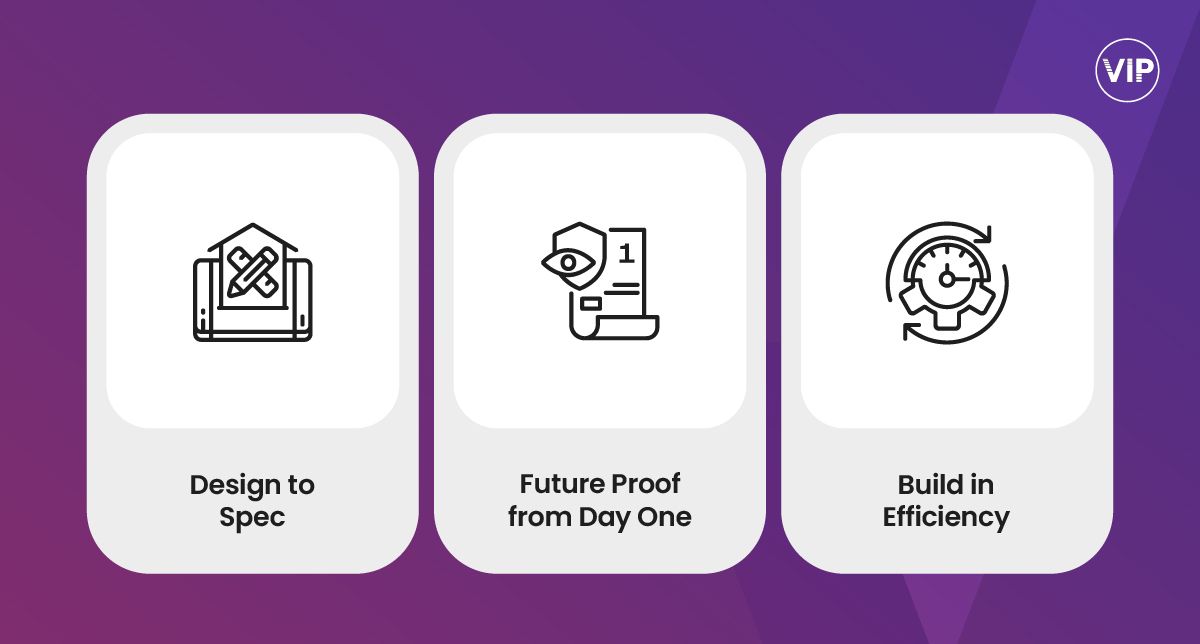
1. Design the Smart Metering Systems to Spec
The sub-metering design process starts with capturing a crystal-clear concept of a building’s needs.
Every site is unique, and operators have different expectations and goals for how a system will support them. Some projects may focus only on residential electricity. Others will need water, gas, and thermal metering simultaneously.
Locking down the firm vision and exact specifications for a project ensures a system design is aimed at the right target.
The following are critical questions to answer for a sub-metering system design:
- Which utilities are being sub-metered?
- How many smart meters are needed for each resource system?
- Will common areas and public amenities need to be included? Developers will sometimes request these to help determine dynamic thermal rates.
- Does the building operator want check metering to validate what they are receiving from the utility?
- How does a property’s physics (materials or size) impact metering design?
- What current or future systems will the meters need to integrate with? Billing software, Building Automation Systems (BIS) and analytics platforms.
Validating these factors helps sub-metering projects roll out efficiently and stay aligned with expectations. Poor planning can require future building shutdowns in order to accommodate new meter installations.
Key Factors for How to Design a Sub-Metering System
Sub-metering is best approached as an integrated piece of your systems-level infrastructure and utilities master plan. Misalignment and errors in a metering network can almost always be traced back to deficiencies in front-end planning and design.
This is why involving experts early in new projects is key. Here’s what the overall process typically requires.
Define Scope
Consult on current and future needs of the property type (residential, commercial, industrial)
Confirm All Applicable Sub-Metering Regulations
Identify and navigate relevant regulations, standards, codes, certifications, licenses, and permits impacting the project. Some specifications, operating standards, and billing rules can change across provinces and municipalities.
Site Schematics & Blueprint Review
Review electrical and mechanical drawings to pinpoint meter, gateway, and repeater placements, as well as capture the full project scope and required meter points
Design Engineer for the Property
Smart metering design needs to account for building materials, conduit runs, panel access, electrical or utility room locations, and RF interference to ensure communication paths and data flow reliably
Build Future-Ready for Expansions and Integrations
The metering system you deploy should be ready to support existing or anticipated systems, such as building management systems (BMS), data analytics platforms, asset management tools, or older network infrastructure.
Whether it’s new construction or retrofit, a smart metering system expert should be involved early in the design phase to consult on a project’s requirements based on the factors above.
Your operations need fewer surprises during installation and a faster path to billing. VIP Meter Services’ professional engineers partner with you from planning to commissioning.
Contact our team today to have our experts review your next project.
2. Future-Proof Design from Day One
When smart metering is treated as long-term infrastructure, providers can minimize technical debt.
What works today should continue to perform for years to come while energy practices evolve, consumer demands change, and building operations expand.
Designing For Long-Term Performance
Sub-metering systems built on open communication protocols reduce downstream friction and eroding client trust, avoid sunk costs on rip-and-replace, and extend their return on investment.
Meter-Agnostic
Prioritize technology that runs open communication protocols like LoRaWan,, BACnet, or M-Bus, such as Sieco-Tech or LYNKED meters, so your systems can remain viable across platforms, future upgrades, and new installations.
Avoid proprietary or encrypted communications that lock data to a single vendor.
Future-Ready Metering
Designing metering systems for tomorrow means designing them to be compatible with other building systems. Even if they aren’t initially in scope, many portfolios eventually add or integrate: EV charging, thermal energy tracking, water consumption, building automation and analytics tools
Designing around open standards reduces integration friction, avoids rip-and-replace costs, and protects client trust.
Anticipate Life-Cycle Costs and Compliance
Long-term reliability and performance of a smart system need to account for wear and tear and regulatory changes.
- For electric smart meters, prioritize hardware that supports re-verification, audits, exchanges, remote firmware updates, and battery replacements without compromising meteorological seals. Preserving S-E-04 seals during these activities prevents unnecessary field calls and saves money.
- Choose devices with proven accuracy retention, especially in water or thermal applications where flow rates vary. Meters using ultrasonic pulses offer longer life and better precision than mechanical options.
Planning for the future is only one part of a reliable deployment. Ensuring the system performs as expected on day one requires the right tools, processes, and validation.
3. Build in Workflows to Eliminate Errors & Delays
Smart metering projects are time-sensitive. User consumption cannot be tracked or invoiced until a system is commissioned, and installations have to mesh with broader construction workdays. Poor planning may cause future shutdowns to accommodate new electrical meters.
This means project plans should define who owns each step, how updates are communicated, and what needs to be validated before the project moves forward.
Tools & Capabilities
Installation workflows that empower field teams avoid mistakes and identify errors rapidly will help avoid costly rework and system performance issues down the road.
VIP uses the LYNKED Vermetra platform to standardize deployments from install through billing. During installation, providing key accuracy and accountability features.
Smart Meter Deployment Software
Guided commissioning tools walk electricians and technicians through each installation step with validation checkpoints to catch issues early. This includes real-time dashboards for visibility into project status so operators can keep tabs on project schedules.
In addition, Vermetra supports automated device ID capture, tenant-to-meter mapping, and panel-level assignments.
Compliance Processes
Billing-ready systems require design plans to have built-in validation and alignment checks. Repeatable, step-by-step processes keep commissioning on schedule and reduce the risk of failed verification, bottlenecks, and lost workdays.
VIP’s Metering Compliance Workflow
Our professionals empower sub-metering companies to avoid the most common friction points of a new sub-metering installation.
Step-by-Step Smart Meter Deployment Accuracy
We guide and train installation teams to implement systems correctly, leverage installation workflow tools to validate each step and keep projects accountable, and perform rigorous testing before commissioning to confirm meters are working properly and communicating to the Meter Data Management System
Inspection-Ready Smart Meter Process
When required for electrical metering, we confirm that metering documentation and checkpoints are accurate before a scheduled inspection. As an Authorized Service Provider for Measurement Canada, VIP also performs S-E-04 verifications.
Start Smooth Deployments with Precision Sub-Metering System Design
Seamless smart metering installation requires pulling in the right experience, insight, and leadership to develop a comprehensive project design.
This is where VIP Meter Services steps in.
A complete sub-metering design package includes.
- Meter types and required meter points
- Meter locations and communication architecture
- Network infrastructure requirements
- Spacing, access, and installation constraints
- Installation guidance and specifications
- S-E-04 Verification
- Commissioning procedures to be used after installation.
Complete Sub-Metering Design in 10 Days
If you're ready to bring systems online faster with fewer errors and better long-term performance, VIP’s team of professional engineers is ready to partner with you.
In most cases, VIP can deliver a complete sub-metering design package in as little as 10 days once we have electrical and/or mechanical drawings.